
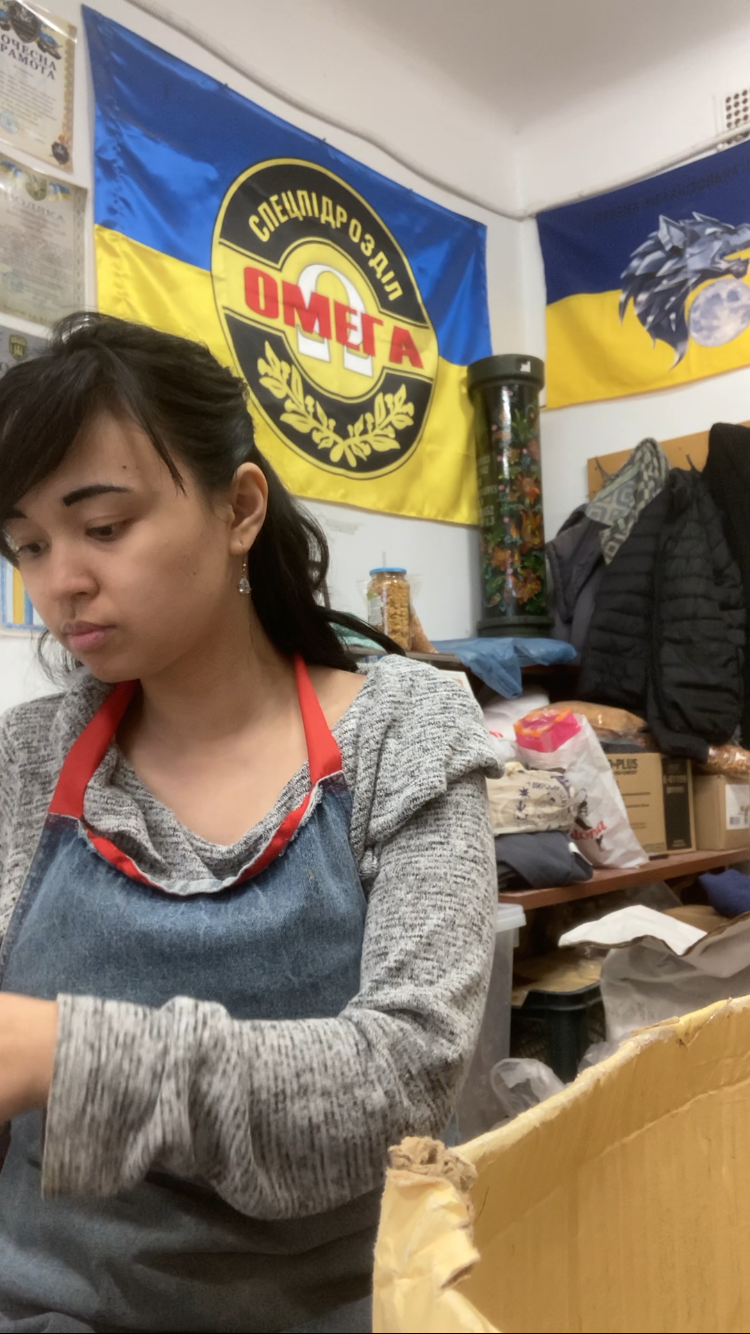
People in the group chat were arguing about the Lviv Volunteer Kitchen and its presence on Google Maps. Some were saying that they didn’t like that the kitchen was advertised on Google maps, it being so obvious where to target, but others were saying that if no one knows where it is, then they can’t get the help that they need and that they (Russian military) likely already knows where it is.
Personally, I hear both sides. The Volunteer kitchen needs volunteers. There are no employees, just people wanting to help. If you don’t know about it, if you don’t know where it is, there are less people volunteering. However, how tragic would it be if a missile striked the kitchen. Someone in the group chat said “not on google maps = less help, on google maps = no kitchen.” Obviously, that is a very over simplified way of putting it, but it did make me question whether this is a post I wanted to make in the first place. Ultimately, I decided to without the address linked below…

The Location:
I often used Uklon to get here because it was pretty far from my Airbnb in the south end of the city centre. One thing that I found is that you have to kind of move the pin on the map up, otherwise, the map directs them to a nearby restaurant. It’s walkable to the kitchen, but not convenient.
What is the Kitchen for?
In the kitchen, there are often many older women helping with few men as well. The food being made here is for the Ukrainian military and one thing I love about it is that there are no set schedules or shifts, you walk in when you want and walk out when you want (as long as the kitchen is open).
Typically, they get different types of vegetables and other foods (the first day, I made chicken jerky!) You will peel or cut the vegetables, depending on what it is and put them on these metal trays. Then someone, often a man (I tried but the women told me not to pick them up) will bring them over to the dehydrator. There, they will stay until they are fully dehydrated and then you pack them in these little soup bags, shown below. Put boiling water in it, and *magic* hot soup!


These little bags go everywhere and anywhere. And it’s not just one or two kinds, they have tons of different soups.
Typically, you will peel potatoes, carrots and beets (lots of beets), cut persimmons, and I never got to, but sometimes they bring out the garlic and onions. Apparently, it really depends on what is needed at the time.


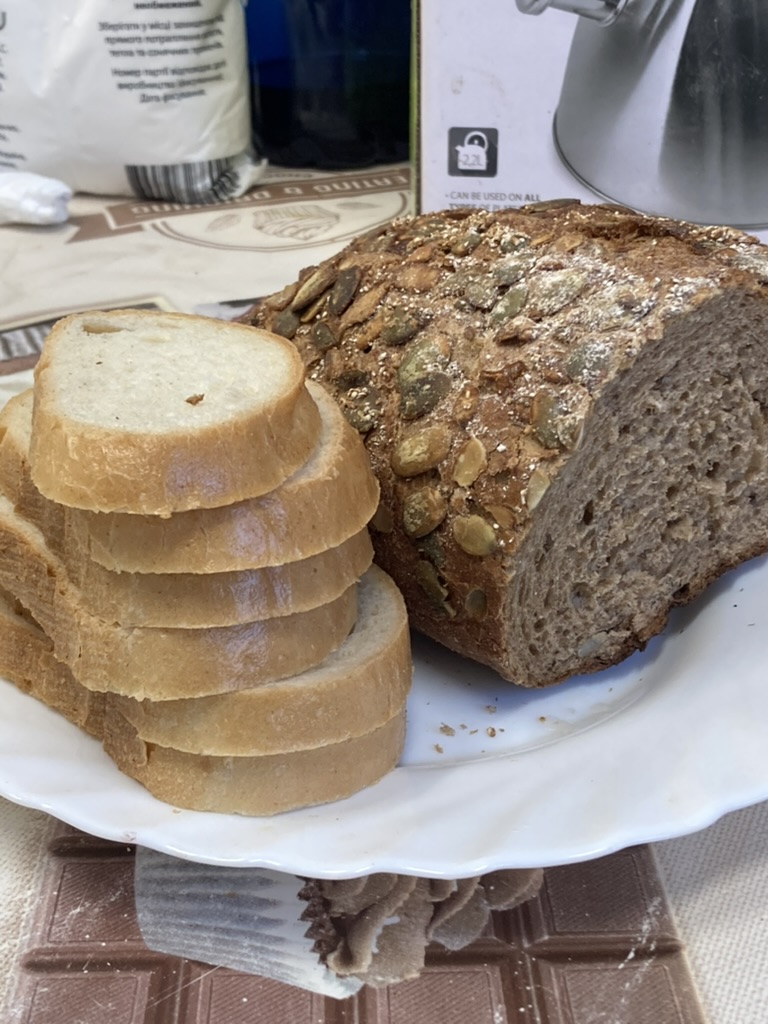
For dinner, they will usually give you Borscht and maybe some bread as well. Breakfast, they also will share some deruny or other breakfast-type dish. I often would be there during lunch but not breakfast.
The First Day:
The first day I went, I walked into the front door and just said in Ukrainian, “I want to volunteer here.” The lady then said the same thing to the other women in likely more eloquent Ukrainian and a lady next to me showed me what to do. They told me that there is coffee and tea for everyone on the side table and we got to work. The first day, it was only Ukrainians. Someone across the table asked me if I spoke Ukrainian, “Trish-ke” I said, (a little bit) she smiled and nodded and asked in English, “Where are you from?” I told her, “Ya z America” or (I’m from America). Many of the people at the table made audible “ooh or awws” I smiled and continued to work.
I didn’t come here to get an ego stoke, but I won’t lie and tell you I didn’t appreciate being seen or valued in that way.

“How old are you?” I looked up and the lady in the green apron was cutting a potato, wanting to get to know me. In America, I come in, I volunteer and I leave and no one really cares to get to know you. They say people in America are overly friendly and those in Europe are standoffish, but that sure hasn’t been my experience!
For some reason, 12 and 20 are still hard for me, so I’m pretty sure I said at first “12-7 years” and she looked confused, so I resorted to English, “27 years.” Again, many of the ladies seemed maybe surprised, or in awe that a 27 year old from America would come all the way to Ukraine, alone to help.
One thing that was funny is that I often go by my nickname, “Sho.” It’s just easier than my longer name and no one’s ever had an issue pronouncing it. Here, people would ask me my name and I would say “Sho,” and people often would repeat themselves, so I would say, “My name is Sho” in Ukrainian. It actually didn’t dawn on my until probably the end of my trip, but “sho” in Ukrainian is what- so they were repeating themselves because they thought I didn’t understand and was saying “what?” Which I honestly thought was funny. They were probably confused on why parents would name their child “what” haha!
But honestly, I really liked the woman in the green apron, Alina. Alina was there everyday and usually was the one to sit next to me and help me know how to cut or peel the different vegetables and tell me when I should toss a vegetable out because it was too bad. Especially with the persimmons, many of them were soft, not fit for grocery stores, so instead they came here. So, no- we didn’t feed the military rotten persimmons, we cut those parts out!
At the end of my stay, I had gone to the kitchen almost every day for a week. I got to know the regular Ukrainians, I tried the honey granola that one of the men would make and put in mason jars, and I also got to meet some of the regular expats.
Some from America, many from Australia, few from France, Romania, Poland, Norway and the UK.
One thing I loved about volunteering and really just being in Ukraine is that while the media coverage may not be as active in America or wherever you are, there are people from different countries gathering together because they won’t let the support die, like the coverage has. They come together, help and dedicate their time to help, support and keep the Ukraine efforts alive.

I told Alina that it was my last day and that I was leaving on the plane the next day. She looked visibly sad (which I wasn’t expecting since while it had been every day for a week, it was only a week. I think maybe I thought the coming and going of expats is something Ukrainians here were desensitized to but maybe it’s the opposite, they’re sensitive to the help they get during such a difficult time). She asked me if I was coming back and I told her I was. Given much of my Ukrainian learning was based on survival, months were low on the priority list. I wanted to come back that year and the only month I knew was May (when I’m going to Japan) and December (way too cold!) Then I remembered August, so I told her that I was returning in August.
When I left the next day, I knew I was coming back in August because I told her and I can’t let Alina down! After being back in the States for a couple months, if I can afford it, I absolutely will, but I may have overestimated how much money I actually have to go on three overseas trips in one year!


Sneak a peek above with “the woman in the green apron” i.e. Alina, who by the way- did wear whatever apron was available on the rack but seemed to pick the green apron more times than one.
No links today…

Cheers friends & Travelers!
~Sho, Founder of Backroad Butterflies ~
Follow me on my socials: Instagram Facebook
Leave a Reply